For over a decade, the global standard for protecting infrastructure from lightning remained largely static. Engineers used the same formulas, the same maps, and the same “check-the-box” mentality. But now, that era officially ends.
The transition from IEC 62305-2:2010 (Edition 2) to the new 2024 (Edition 3) standard is more than a routine update; it’s a fundamental shift in how we calculate, manage, and transfer risk. For executives and compliance teams, it represents the move from simple “rod and wire” engineering to a sophisticated Enterprise Risk Management (ERM) model.
Here is what you need to know about the science and the strategy behind the 2024 reset.
- The Physics of “Double Trouble”: From Ng to Nsg
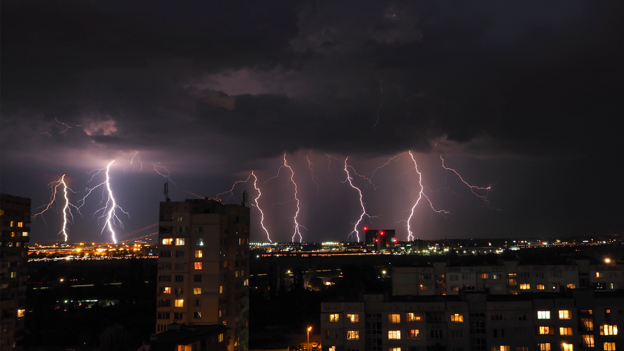
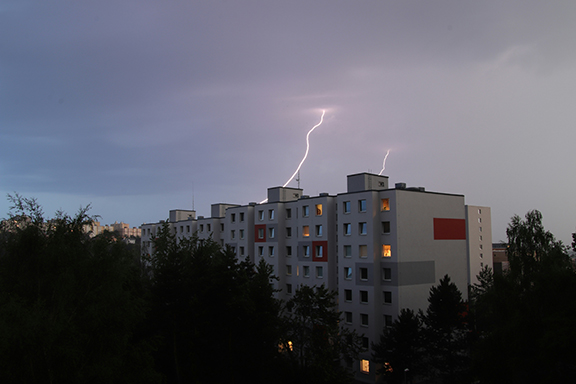
The most jarring change in the 2024 standard is the revelation that we have been undercounting lightning for years. The 2010 standard relied on Flash Density (Ng). However, modern satellite and sensor data have proven that a single lightning “flash” often has multiple “ground strike points.”
The 2024 standard introduces Strike Ground Density (Nsg). By applying a new multiplier (k=2.0), the standard effectively doubles the calculated strike frequency for any given site. In the eyes of the law and the insurer, your facility is now twice as likely to be hit as it was yesterday.
- Rtotal: The Unified Compliance Red Line
In the past, risk assessments were often fragmented, looking at life safety, service loss, and physical damage in silos. The 2024 standard consolidates these into a Unified Risk Profile Rtotal.
All technical and operational factors are now funneled into a single pass/fail metric measured against a Tolerable Risk (RT) threshold. If your Rtotal exceeds RT, you are non-compliant. This clarity removes the “grey areas” that previously allowed aging facilities to defer necessary upgrades.
- Measuring the Invisible: The Frequency of Damage (F)
Traditionally, lightning protection was about preventing the building from catching fire. But in a digital economy, “staying upright” isn’t enough—you have to stay online.
The 2024 standard introduces the Frequency of Damage (F) metric. This brand-new calculation quantifies the risk of equipment failure, software resets, and system downtime. It targets 99.9% availability, shifting the focus from physical “bricks and mortar” to the survival of the internal systems that drive revenue.
- The Rise of Active Safety (TWS)
For the first time, the IEC standard formally recognizes Thunderstorm Warning Systems (TWS), governed by IEC 62793, as a valid mathematical way to reduce life-safety risk (L1).
By integrating technology that predicts strikes before they happen, organizations can now use “Active Safety” to move personnel to safety. This recognition allows for a more flexible, technology-driven approach to safety that goes beyond passive copper cables.
- The “Class Jump” and the Capital Expenditure Reality
Because the math behind strike frequency has doubled, the “Protection Class” required for most buildings has shifted. A facility that met compliance with Class III (Basic) protection under 2010 rules may now mathematically require Class I or II (Maximum) protection.
This “Class Jump” means that many existing lightning protection systems are now technically inadequate. For the C-Suite, this isn’t just a technicality; it’s a capital expenditure (CAPEX) reality that requires immediate gap analysis.
Conclusion: Bridging the Gap
As we launch this new standard on March 9th, the message is clear: The universe doesn’t negotiate with 2010 spreadsheets.
Ignoring the 2024 update is a decision that can quickly turn into a liability. Facilities that fail to benchmark against these new requirements may find themselves unprotected not just from lightning, but from insurance claims and regulatory audits.
Is your facility ready for the 2024 reset?
The transition starts now. Ensuring your people, data, and infrastructure are protected requires a partner who understands that lightning protection is no longer just engineering; it’s the cornerstone of your business continuity strategy.
Sources:
- International Electrotechnical Commission (IEC): Standard 62305-2:2024 (Edition 3) – Protection against lightning – Part 2: Risk management.
- Atmospheric Science Research: Comparison of Cloud-to-Ground Flash Density (Ng) vs. Strike Ground Density (Nsg) and the implementation of the k=2.0 multiplier for multiple grounding points.
- Global Lightning Data Networks: Meteorological updates on lightning strike frequency and satellite-based Strike Ground Density (Nsg) mapping (2024-2026 data).